
Next.js 15 and React 19 in Production: Hard-Earned Lessons from the Trenches
 Abhishek Madaan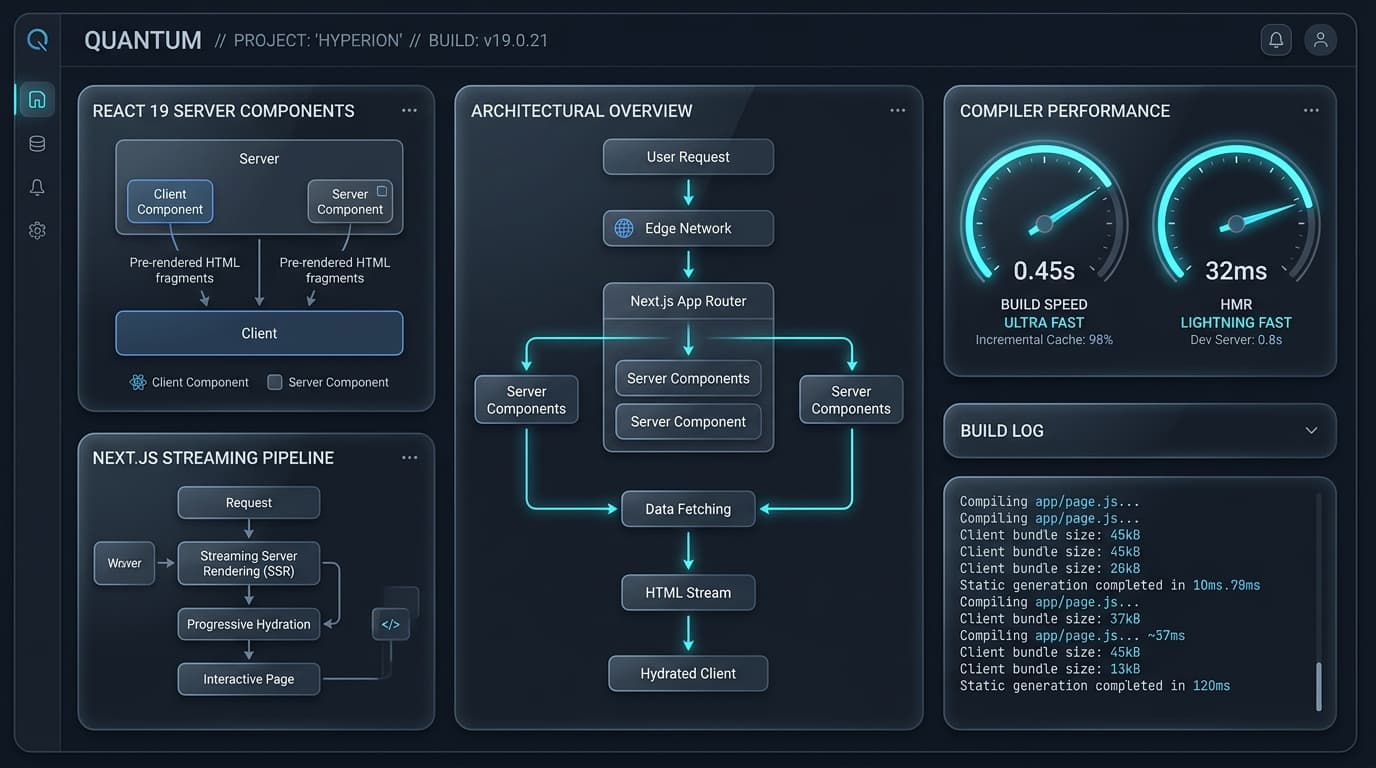
Next.js 15 and React 19 in Production: Hard-Earned Lessons from the Trenches
Upgrading large fullstack codebases from Next.js 14 to Next.js 15 and React 19 was one of the most anticipated shifts in the React ecosystem. With major changes in caching defaults, asynchronous request APIs, and compilation strategies, the transition introduced both immense power and subtle migration hurdles.
Having migrated multiple client applications and our own platform at Object Oriented Teens, here is what you need to know to write resilient, modern Next.js 15 applications.
🔄 Breaking Change: Async Request APIs
In Next.js 14 and earlier, route parameters, search queries, and cookies were accessed synchronously:
// ❌ Old Next.js 14 pattern (Deprecated/Errors in Next 15)
export default function Page({ params }: { params: { slug: string } }) {
  const cookieStore = cookies();
  const token = cookieStore.get('token');
  return <div>{params.slug}</div>;
}
In Next.js 15, dynamic APIs are strictly asynchronous Promises. This allows the server runtime to optimize streaming rendering without blocking the initial response shell:
// ✅ Modern Next.js 15 pattern
import { cookies } from "next/headers";

type Props = {
  params: Promise<{ slug: string }>;
  searchParams: Promise<{ [key: string]: string | string[] | undefined }>;
};

export default async function Page({ params, searchParams }: Props) {
  const { slug } = await params;
  const cookieStore = await cookies();
  const token = cookieStore.get("token")?.value;

  return <h1>Viewing: {slug}</h1>;
}
🚀 The End of Aggressive Caching by Default
One of the most praised decisions in Next.js 15 was reversing the aggressive fetch() caching introduced in Next.js 13.
In Next.js 15:
fetchrequests default tocache: 'no-store'instead offorce-cache.- Route handlers (
GET) default to dynamic execution instead of static pre-rendering. - Client navigations respect fresher server state without stale page flicker.
If you specifically need static caching for public content, you declare it explicitly:
const res = await fetch("https://api.example.com/data", {
  next: { revalidate: 3600 }, // Cached for 1 hour
});
This single change eliminated countless phantom cache bugs that previously plagued developer teams.
⚡ React 19 Actions and Optimistic UI
React 19 brings native handling for asynchronous form transitions through useActionState and useOptimistic. We no longer need cumbersome useState boilerplate to track pending submission states:
"use client";

import { useActionState, useOptimistic } from "react";
import { updateProfile } from "@/server/actions";

export function ProfileForm({ initialName }: { initialName: string }) {
  const [state, formAction, isPending] = useActionState(updateProfile, null);
  const [optimisticName, setOptimisticName] = useOptimistic(
    initialName,
    (_current, update: string) => update
  );

  return (
    <form action={async (formData) => {
      const newName = formData.get("name") as string;
      setOptimisticName(newName);
      await formAction(formData);
    }}>
      <input name="name" defaultValue={optimisticName} />
      <button type="submit" disabled={isPending}>
        {isPending ? "Saving..." : "Save Profile"}
      </button>
    </form>
  );
}
🛠 Turbopack in Production
Turbopack is now stable for both local development (next dev --turbopack) and build pipelines. On our larger repositories with thousands of modules:
- Local dev server cold start dropped from 7.2s to 1.1s.
- Hot Module Replacement (HMR) triggers in under 40ms.
Next.js 15 with React 19 finally delivers on the original promise of the App Router: predictable caching, clean async streaming, and unmatched developer velocity.