RAG is "Obsolete": Welcome to the Era of the Self-Chunking AI Agent
Headlines like “RAG is dead” or “Vector DBs are obsolete” exaggerate the truth, but they reflect a real shift in how Retrieval-Augmented Generation systems are built. Rigid, pre-chunked pipelines are giving way to agentic systems that can read full documents and decide what matters at runtime.
The Old RAG Model
Traditional RAG emerged when LLMs had small context windows:
- Documents were split into fixed-size chunks
- Chunks were embedded and stored in vector databases
- Queries retrieved a few “similar” snippets
- The LLM answered using fragmented context
Problem: This approach breaks long-range context, is brittle, and often leads to hallucinations when answers span multiple sections of a document.
What Changed
Two advances made this approach less necessary:
- Huge context windows (entire books, codebases, or reports fit in memory)
- Agentic reasoning (models can plan, fetch data, and decide what to read)
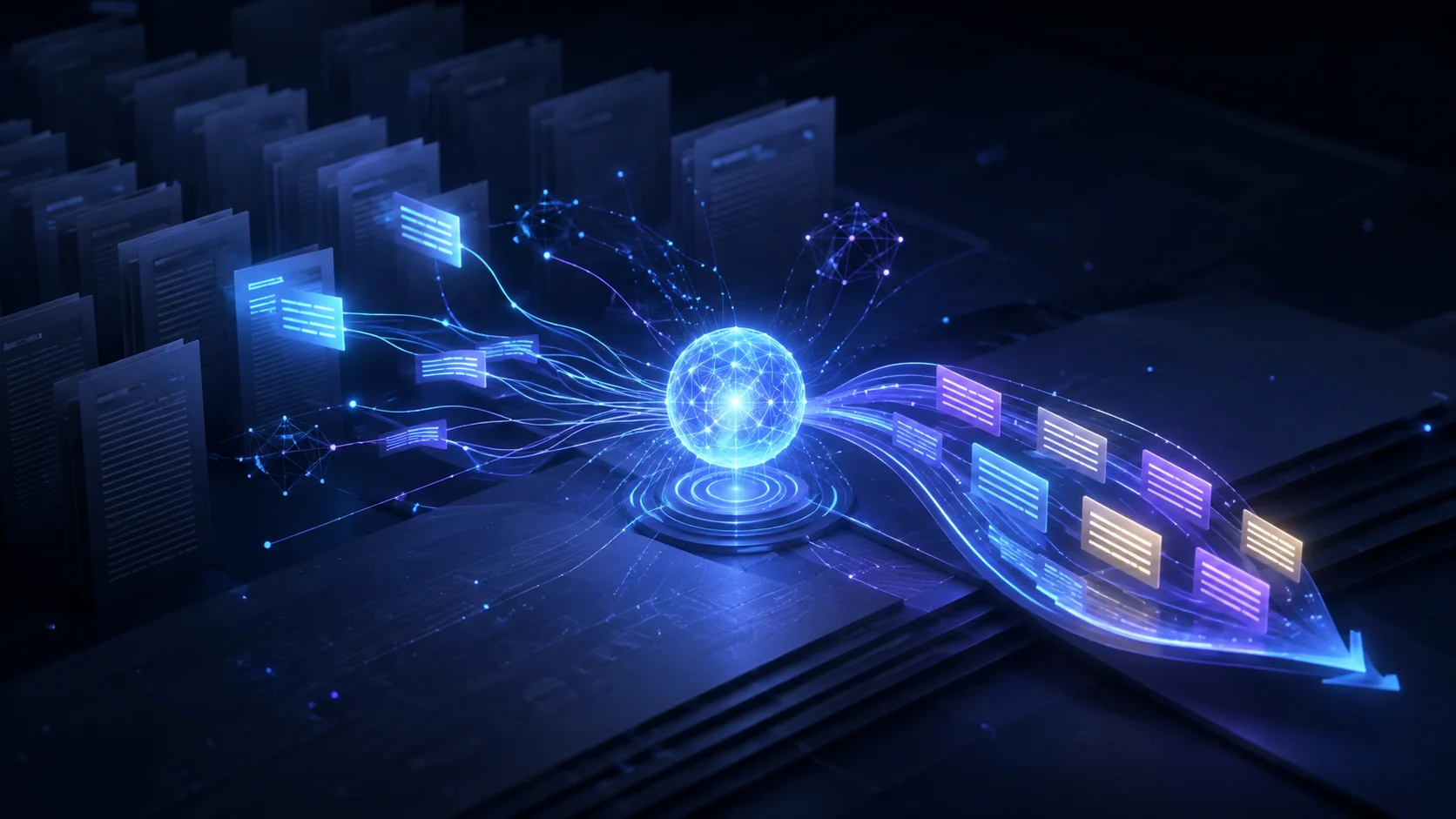
The New Paradigm: Fetch & Self-Chunk
Instead of pre-processing everything:
- The model decides which documents it needs
- It fetches full documents into context
- It “self-chunks” in-context—finding relevant sections while preserving meaning
This mirrors how humans search and read: scan, focus, contextualize, then answer.
Why This Matters
For many use cases (PDF Q&A, contract analysis, medium codebases):
- Full context improves accuracy
- No heavy ingestion pipelines are required
- Reasoning replaces blind similarity search
Reality Check
Traditional RAG isn’t gone—it’s shrinking in scope. At massive scales, retrieval is still needed to narrow data down. But it’s becoming a backend optimization, not the core design.
The future of RAG is agent-driven: systems that can fetch, read, and understand information on their own.