Vibe Coding & Agentic IDEs: How AI Coding Changed Software Engineering Forever
 Abhishek Madaan
Vibe Coding & Agentic IDEs: How AI Coding Changed Software Engineering Forever
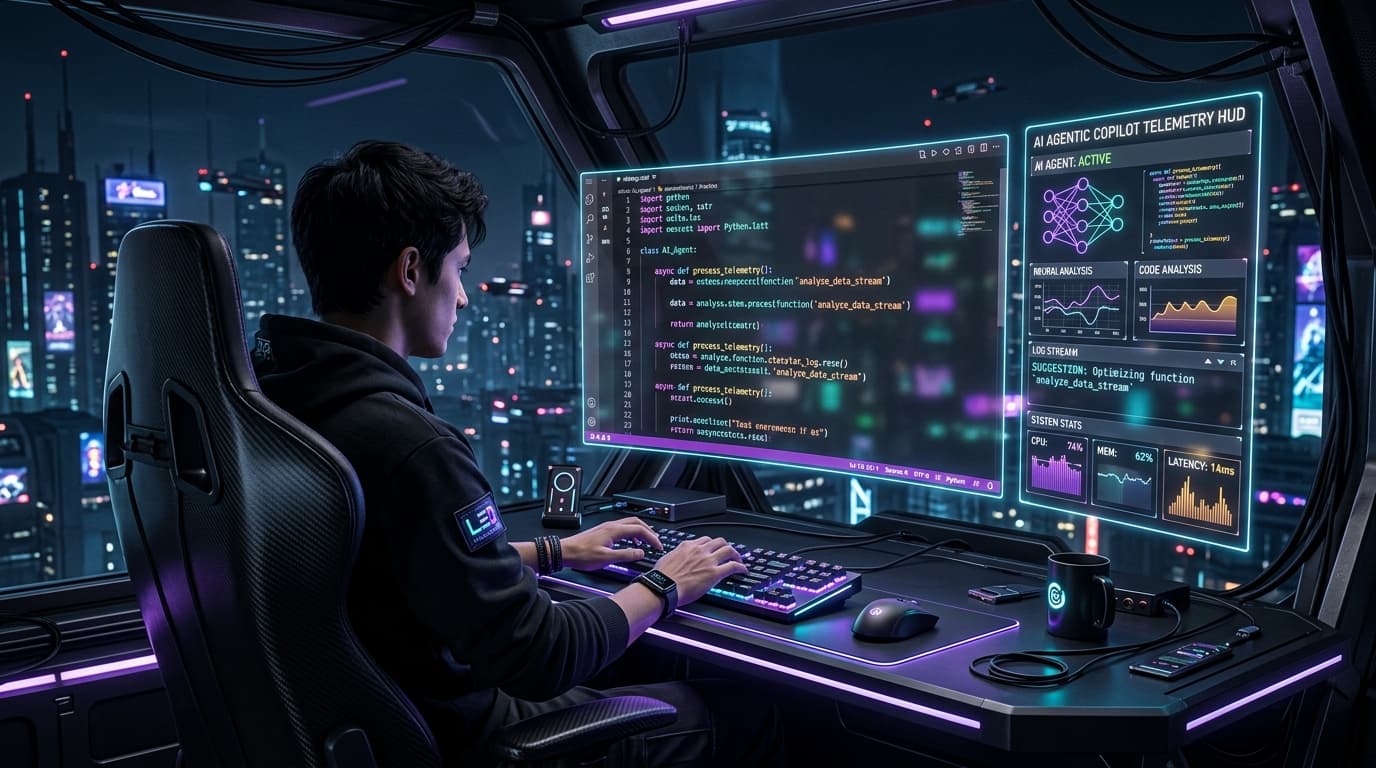
In late 2024, Andrej Karpathy coined the term "vibe coding" to describe a radical shift in how software is created: instead of typing out every semicolon and looking up API parameters in documentation, developers express high-level architectural intentions, and AI agents write, test, and iterate on the code.
What started as an amusing phrase has matured in 2025 and 2026 into the dominant workflow of modern software engineering.
With tools like Cursor, Windsurf, and autonomous CLI agents like Claude Code and Antigravity, software engineering has undergone its most profound transformation since the invention of the compiler.
📈 From Copilot Autocomplete to Agentic IDEs
To understand the magnitude of this shift, observe how developer tooling evolved across three distinct generations:
- Generation 1 (2021-2023) — Predictive Autocomplete: GitHub Copilot suggests the next three lines of code based on the current file buffer. Useful, but passive.
- Generation 2 (2023-2024) — Sidebar Chat: Developers paste snippets into a sidebar, ask questions, and manually copy-paste the resulting code back into their editor. High friction.
- Generation 3 (2025-2026) — Agentic Codebases: The editor indexes your entire repository into ASTs and semantic vector embeddings. The agent executes terminal commands, reads error traces, inspects browser DOMs, and applies multi-file diffs autonomously.
   Developer Goal ──► Agentic IDE Planner ──► Grep / File Tree Search
                             ▲                       │
                             │                       ▼
                      Terminal / Linter ◄──── Multi-File Edits
                        Feedback Loop
🧠 What Software Engineering Actually Looks Like Now
Some critics initially warned that AI would eliminate the need for software engineers. The reality has proven quite different: AI has eliminated the tedious boilerplate, leaving engineers free to focus on architecture, system invariants, and user experience.
The day-to-day work of a senior developer in 2026 looks like:
- Defining Domain Models & Types: Crafting strict TypeScript types, Prisma schemas, and database constraints that give the AI guardrails.
- Prompt Architecture: Writing modular instructions in repository rules (
.cursorrules,AGENTS.md, or specialized agent skills) to codify team conventions. - Reviewing Diffs with Rigor: Inspecting agent proposals for security loopholes, race conditions, edge case exceptions, and architectural purity.
- Test-Driven Specification: Writing integration test cases first, then letting the agent iterate until the test suite turns green.
⚠️ The Dark Side: Vibe Coding Pitfalls & How to Avoid Them
Vibe coding without discipline can quickly lead to an unmaintainable codebase:
- The Hallucinated Dependency Trap: Agents will occasionally install obscure or deprecated npm packages to solve simple problems. Rule: Enforce package lock reviews and maintain strict dependency linting.
- Context Rot: As conversations stretch across hours, agent context windows fill with stale debugging logs. Rule: Keep agent sessions short and task-specific.
- Architectural Drift: If three different agents implement three different state management patterns, your codebase becomes chaotic. Rule: Explicitly document established architectural conventions in project rules.
🚀 The Solo Developer Superpower
At Object Oriented Teens, our development velocity has multiplied several times over. What once required a team of five engineers—frontend specialist, backend architect, DevOps engineer, QA tester, and copywriter—can now be designed, developed, and deployed by a single talented engineer operating with agentic tooling.
The developers who thrive today are not those who memorize API syntax; they are the systems thinkers who know how to direct, verify, and orchestrate intelligent agents to build extraordinary software.